

What Is a Red Eye Coffee? Red Eye, Black Eye and Dead Eye Explained
What a red eye coffee is, how it differs from a black eye and a dead eye, how much caffeine each one carries, and how to make a red eye at home.
Read moreYour shopping bag is empty
Go to the shopCoffee Trends, Stories and News

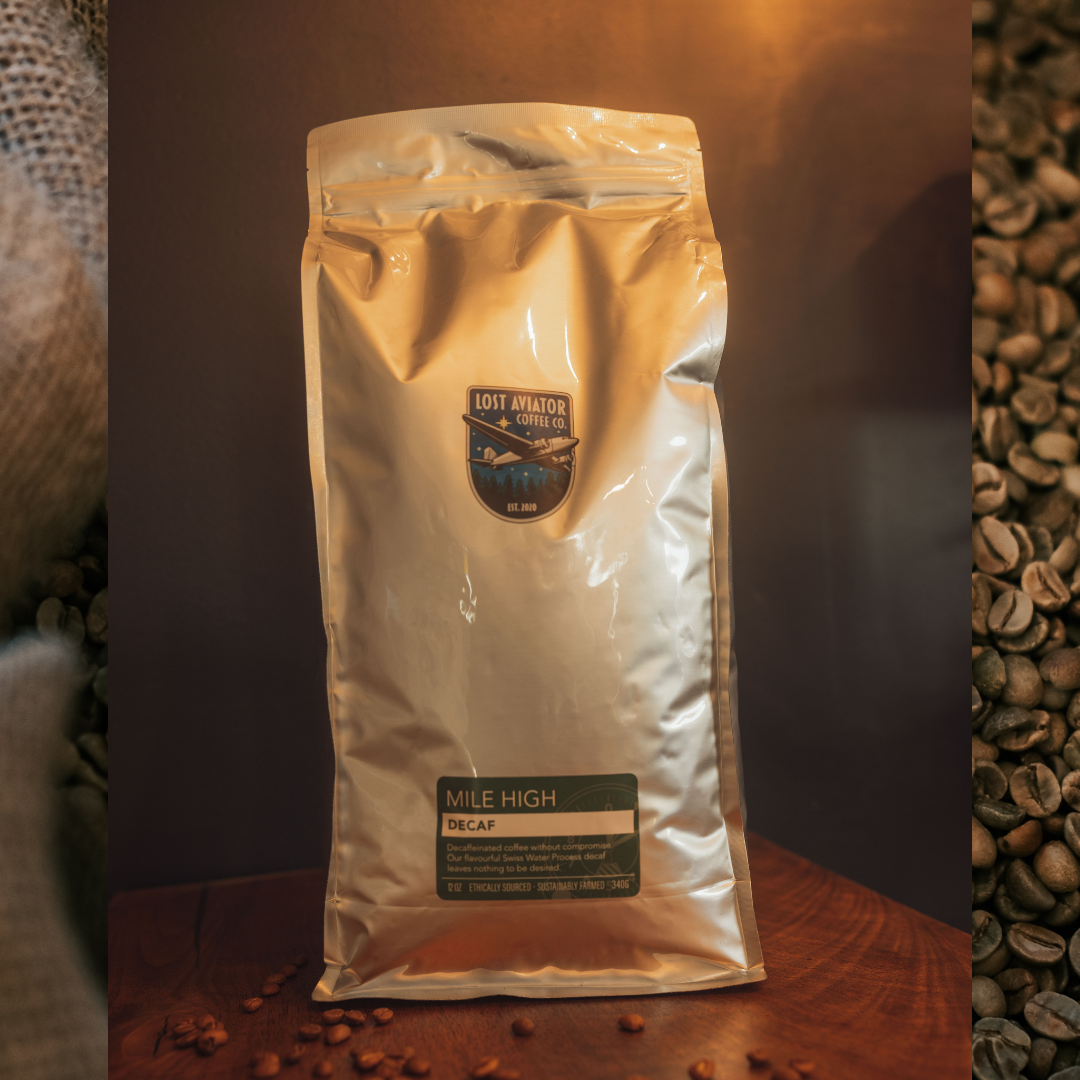
Decaf starts as ordinary green coffee. The caffeine is taken out before the beans are roasted, and how that is done is the biggest difference between one decaf and another. Here is what decaf means in Canada, the main ways caffeine is removed, how the Swiss Water Process used for our Mile High decaf works, and how much caffeine is left in the cup.
Canada sets a legal limit. The Canadian Food Inspection Agency's Canadian Food Compositional Standards say decaffeinated coffee is coffee "from which caffeine has been removed" and that contains not more than 0.1% caffeine, or 0.3% for decaffeinated instant coffee. So decaf is not zero caffeine, but very close to it.
All decaf is made from green, unroasted beans. The National Coffee Association (NCA) explains the starting point: (NCA)
"To remove around 97% of the caffeine found naturally in coffee, green coffee beans are warmed and soaked in liquid in one of four ways, all of which are equally safe and FDA compliant."
The difference is what pulls the caffeine out of the water and the beans. There are three main families:

The Swiss Water Process was developed by the Swiss Water Decaffeinated Coffee Company, based in Delta, British Columbia. In its own words, the process "uses only water, temperature, and time to gently remove caffeine, while preserving all of a coffee's origin characteristics." (Swiss Water)
The steps, as Swiss Water describes them:
Swiss Water's FAQ states that the process "removes caffeine without using any chemicals like methylene chloride or ethyl acetate", and that the vast majority of the coffees it sells are "fully decaffeinated to 99.9% caffeine-free."
A little. Health Canada's caffeine in foods table lists these averages for an 8 oz (237 ml) cup:
| Coffee | Average caffeine per 8 oz cup |
|---|---|
| Brewed | 135 mg |
| Roasted and ground, filter drip | 179 mg |
| Roasted and ground, decaffeinated | 3 mg |
| Instant decaffeinated | 5 mg |
Decaf varies from cup to cup. The US Food and Drug Administration says "decaf coffee typically has 2 to 15 milligrams in an 8-fluid-ounce cup," and a 2006 study in the Journal of Analytical Toxicology found 0 to 13.9 mg in 16 oz servings of decaf bought from coffee shops. (FDA, McCusker et al., 2006)

Health Canada recommends a maximum of 400 mg of caffeine a day for adults, and 300 mg a day for people who are planning to become pregnant, are pregnant or are breastfeeding. The same table gives separate guidance for children and teenagers. If you are cutting back for one of these reasons, decaf lets you keep the ritual of a cup without most of the caffeine. Ask your doctor what is right for you.
The less a process disturbs the bean, the closer the decaf tastes to the original coffee. Swiss Water says its process "ensures as little change as possible in the taste of your coffee", and that never using chlorinated solvents or esters is the reason its decaf "so closely matches the characteristics of the original coffee." (Swiss Water)
Once roasted, store decaf beans the same way as any other coffee. Our guide to storing coffee beans covers it.
Brew decaf with the same recipes as any of our coffees: French press, AeroPress or V60 pour-over.
No. In Canada, decaf coffee can contain up to 0.1% caffeine. Health Canada puts an average cup of ground decaf at 3 mg, against 135 mg for brewed coffee.
Swiss Water says its process uses no chemicals such as methylene chloride or ethyl acetate, only water, temperature, time and carbon filters.
The NCA says all four common methods are equally safe and FDA compliant, and Health Canada permits the solvents used with strict residue limits. The choice between them is mostly about taste and preference.
What a red eye coffee is, how it differs from a black eye and a dead eye, how much caffeine each one carries, and how to make a red eye at home.
Read moreA step-by-step French press recipe with exact numbers: how much coffee to use, how coarse to grind, the right water temperature and steep time, and how to fix a bitter, weak or muddy cup.
Read moreLight, medium or dark? What changes in the cup, what happens to caffeine, and why dark roast does not have to be bitter.
Read more