
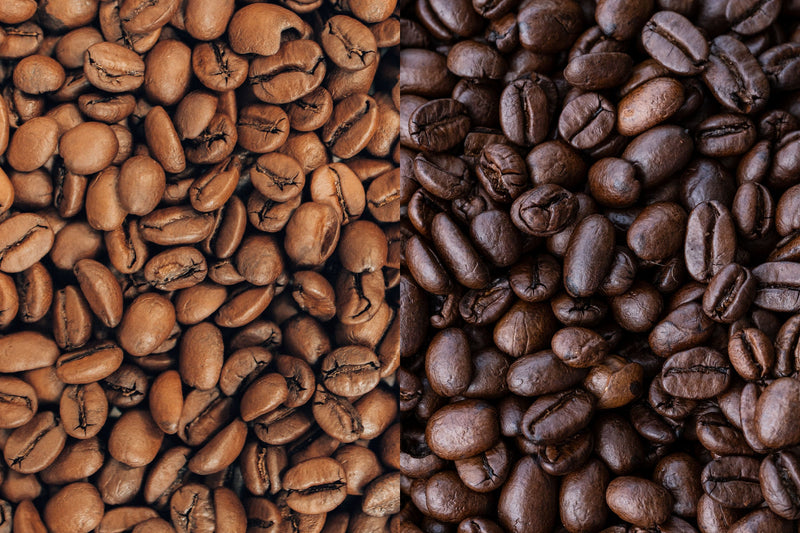
Light vs Dark Roast Coffee: Taste, Caffeine and How to Choose
Light, medium or dark? What changes in the cup, what happens to caffeine, and why dark roast does not have to be bitter.
Read moreYour shopping bag is empty
Go to the shopCoffee Trends, Stories and News

A French press makes a full-bodied, rich cup with very little gear. Here is a recipe with exact numbers, the ratio, grind, temperature and steep time behind it, and what to change when a cup tastes off.
A French press, also called a cafetière or coffee plunger, steeps coffee in hot water, then a filter is pressed down through it. The National Coffee Association (NCA) lists this equipment: (NCA)
We do not sell a classic glass French press. Our immersion brewer is the ESPRO P0 Ultralight Coffee Press, a 16 oz travel press made for good coffee on the go. It works on the same steep-and-press idea, so the method below applies; just scale the dose to the press.

These steps follow the NCA's method, with our numbers for one large mug. (NCA)
| Dose | 20 g of coffee (one large mug) |
|---|---|
| Water | 300 g, a ratio of 1:15 |
| Grind | Coarse, like rock salt |
| Water temperature | About 93°C, roughly 30 seconds off the boil |
| Steep time | About 4 minutes, then press and pour |
The NCA gives a range of 1 gram of coffee to 10 to 16 grams of water, written 1:10 to 1:16. (NCA) Our recipe sits at 1:15, a good place to start. For a bolder cup, move toward 1:12, which is 25 g of coffee to the same 300 g of water. As our brewing tips put it, the more coffee you use, the stronger the cup.
Coarse, like rock salt, in the NCA's description. The reason is the long steep: "the longer the coffee is in contact with water during the brewing process, the coarser the grind should be." (NCA) That is why a French press needs a much coarser grind than the medium-fine setting in our V60 pour-over guide.
Grind just before you brew for maximum freshness, and keep the rest of the bag at its best with our guide to storing coffee beans.
The NCA puts the ideal at around 93°C, give or take 3 degrees. (NCA) No thermometer? Our brewing tips recommend 195 to 205°F and note that water about 30 to 60 seconds off the boil usually lands there.
About four minutes in total. Our brewing tips advise steeping no more than four minutes before you plunge, to keep bitter flavours out.
Pressing does not stop the brew in a standard press. The NCA is clear: "If left in a French press, coffee will continue to brew and turn bitter." (NCA) Pour it all into mugs or a carafe as soon as you have pressed.

Clean it after every use, and take it apart so you can wash the filter. The NCA warns that grounds and coffee oil left on the press can make your next cup taste bitter. (NCA) On the ESPRO P0, the handle unlocks for easy cleaning.
In large amounts, it can raise it. French press coffee is not paper-filtered, so it keeps natural compounds called cafestol and kahweol. In a six-month randomised trial published in the BMJ, 46 healthy adults drank five to six strong cups (0.9 litres) a day of either cafetière or filtered coffee. The cafetière coffee raised LDL cholesterol by 9 to 14% and also raised a liver enzyme; all of the increases reversed once people stopped. (Urgert et al., 1996) A follow-up study by the same team found that cafestol does most of the cholesterol raising. (Urgert et al., 1997) If you are watching your cholesterol, ask your doctor whether paper-filtered coffee suits you better.
The NCA says medium and dark roasts tend to work well, but it is worth experimenting. (NCA) Three of ours to start with:
Our guide to light vs dark roast coffee helps you pick, and our Sample Pack includes all 5 of our signature roasts in 120 g bags, whole bean or ground. At 20 g a mug, each bag makes six French press cups.
The NCA's 1:10 to 1:16 range works out at 62.5 g to 100 g of coffee for 1,000 g of water. At our 1:15 ratio, use about 67 g.
Yes, and all of the coffees above come ground as well as whole bean. The NCA lists drip coffee as a medium grind and French press as coarse, so drip-ground coffee is finer than a press wants. If the cup tastes bitter, shorten the steep or grind whole beans coarse at home.
No. Without one, our brewing tips suggest 1 to 2 tablespoons of coffee per 250 ml of water.
Not in a classic press, because it keeps brewing. ESPRO says the P0's Air Lock Technology stops extraction right after you plunge. (ESPRO)
Light, medium or dark? What changes in the cup, what happens to caffeine, and why dark roast does not have to be bitter.
Read moreThe official AeroPress recipe, explained step by step, with what to change for pre-ground coffee and answers to the most common questions.
Read moreAn easy Hario V60 pour-over recipe with exact weights, the right water temperature and what to change when a cup tastes off.
Read more