
AeroPress Recipe: How to Make Great AeroPress Coffee at Home
The official AeroPress recipe, explained step by step, with what to change for pre-ground coffee and answers to the most common questions.
Read moreYour shopping bag is empty
Go to the shopCoffee Trends, Stories and News

Light, medium and dark are the first thing most people look for on a coffee bag, but the labels do not say much about what is in the cup. Here is what actually changes as coffee is roasted longer, what happens to caffeine, why a dark roast does not have to taste bitter, and how to pick the roast you will enjoy.
Roasting turns hard, green coffee seeds into the brown beans we brew. The longer and hotter the roast, the darker the bean. The National Coffee Association describes the three main levels like this: (NCA)
The Specialty Coffee Association calls roast level "the most powerful driver of coffee flavor", and explains that flavour is driven by "the temperature of the roaster, the time spent in the roaster, and the shade of brown the coffee ultimately reaches." (SCA) In other words, two dark roasts can taste very different depending on how the roaster gets them there.
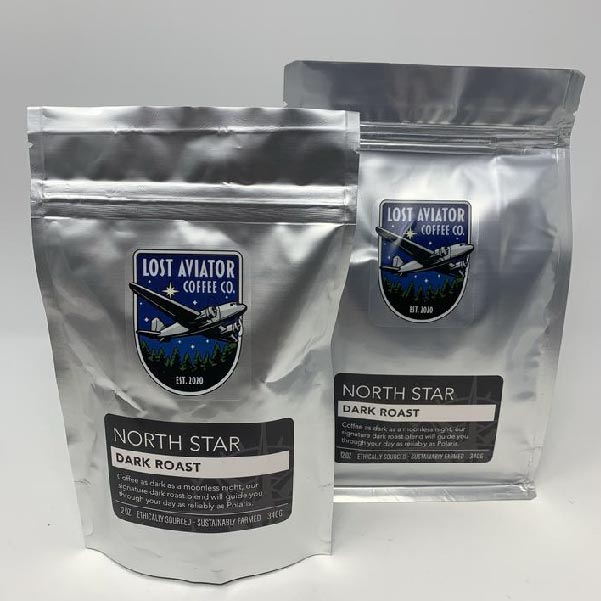
No. Dark roasts have a reputation for an oily surface and a bitter, burnt taste, but that is not a given. At Lost Aviator we roast our dark roast deliberately to keep it smooth. North Star has no oily surface and none of the harsh bitterness many people expect from a dark roast. What you get instead is a smooth, robust cup with cocoa and a hint of tobacco.
If you have stayed away from dark roasts because they tasted bitter, North Star is the one to try.

As beans heat up they dry out, turn brown and swell. They lose between 15 and 19% of their weight during roasting (Vargas-Elías et al., 2016) and become much less dense. One study of finely ground coffee measured bulk density falling from 0.43 g/cm3 for green coffee to 0.28 g/cm3 for a dark roast, because the beans grow bigger and lighter at the same time. (Nakilcioğlu-Taş and Ötleş, 2019)
Roasters listen for two audible stages. First crack, a popping sound, happens at around 200°C, and second crack, a quieter crackle, at around 230°C, according to research reported by ABC Science. (ABC Science)

Less difference than you might think, and dark roast is not "stronger" in caffeine just because it tastes stronger. The NCA says light roasts have slightly more caffeine and that a dark roast's bold taste is not linked to caffeine. (NCA)
A 2024 study in Scientific Reports found the answer depends on how you brew. Brewed the same way, dark roasts generally had less caffeine than light and medium roasts. But when the coffees were extracted to the same degree, dark roasts generally had more. (Lindsey et al., 2024)
There is also a simple kitchen reason. Because dark beans are less dense, a scoop of dark roast holds less coffee by weight than a scoop of light roast. Weighing your coffee, as our brewing tips recommend, takes most of that difference away.
For many people, yes. A medium roast keeps some of the brightness of a light roast and adds the body and chocolate notes of a darker one. It is the easiest place to start if you drink your coffee black one day and with milk the next.
No. The NCA notes that "Espresso roast isn't a specific roast level." Espresso is a brewing method, and any roast can be used. Our Red Eye to Rome Espresso is a medium roast, blended for dark chocolate, dark fruit and crema.

| Coffee | Roast | Tasting notes (from each product page) | Origin |
|---|---|---|---|
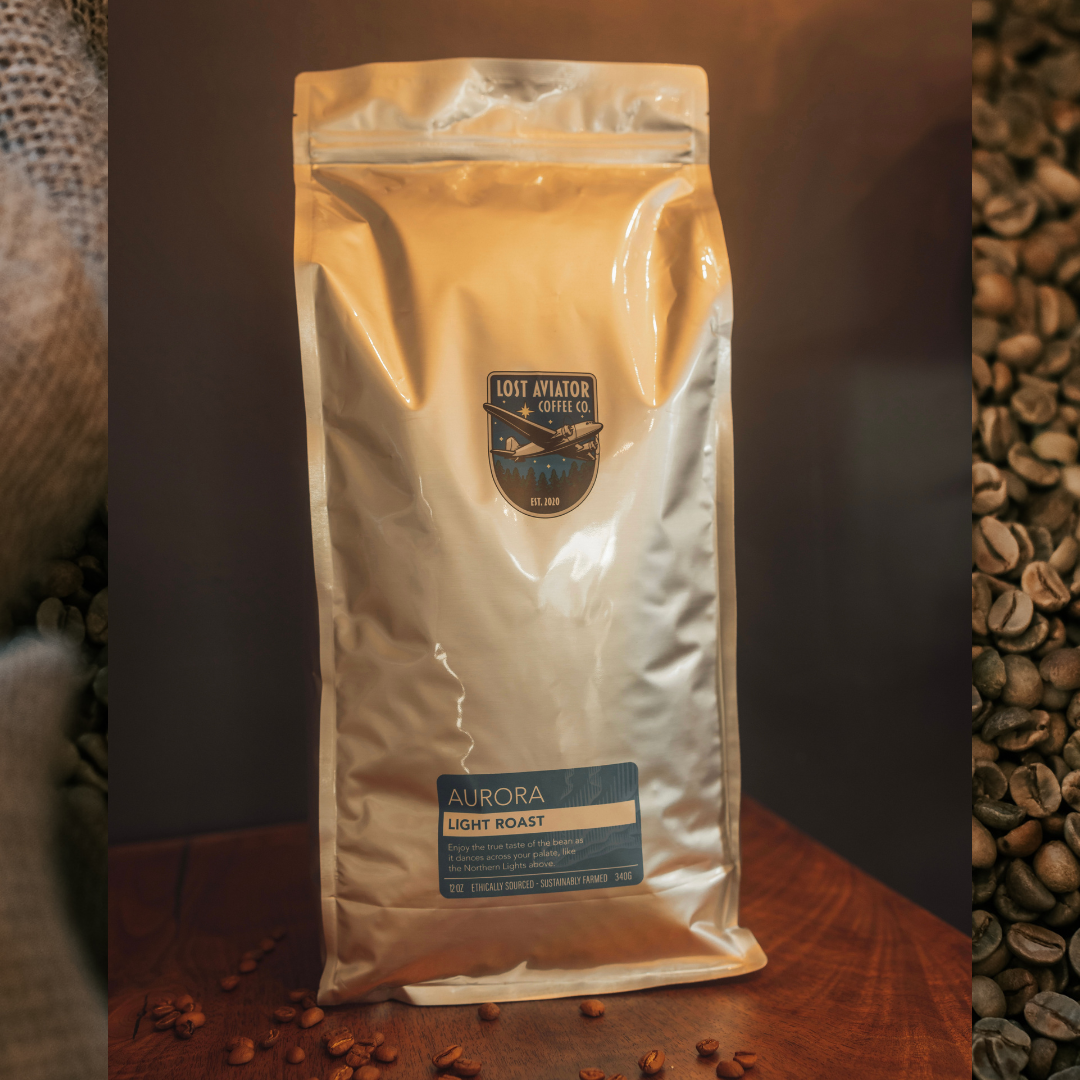
| Aurora | Light | Light acidity and delicate sweetness | Colombia (washed), Ethiopia (natural) |
| Constellation | Medium | Smooth and luxurious | Brazil (natural, Minas Gerais), Colombia (washed), Ethiopia Sidamo (natural) |
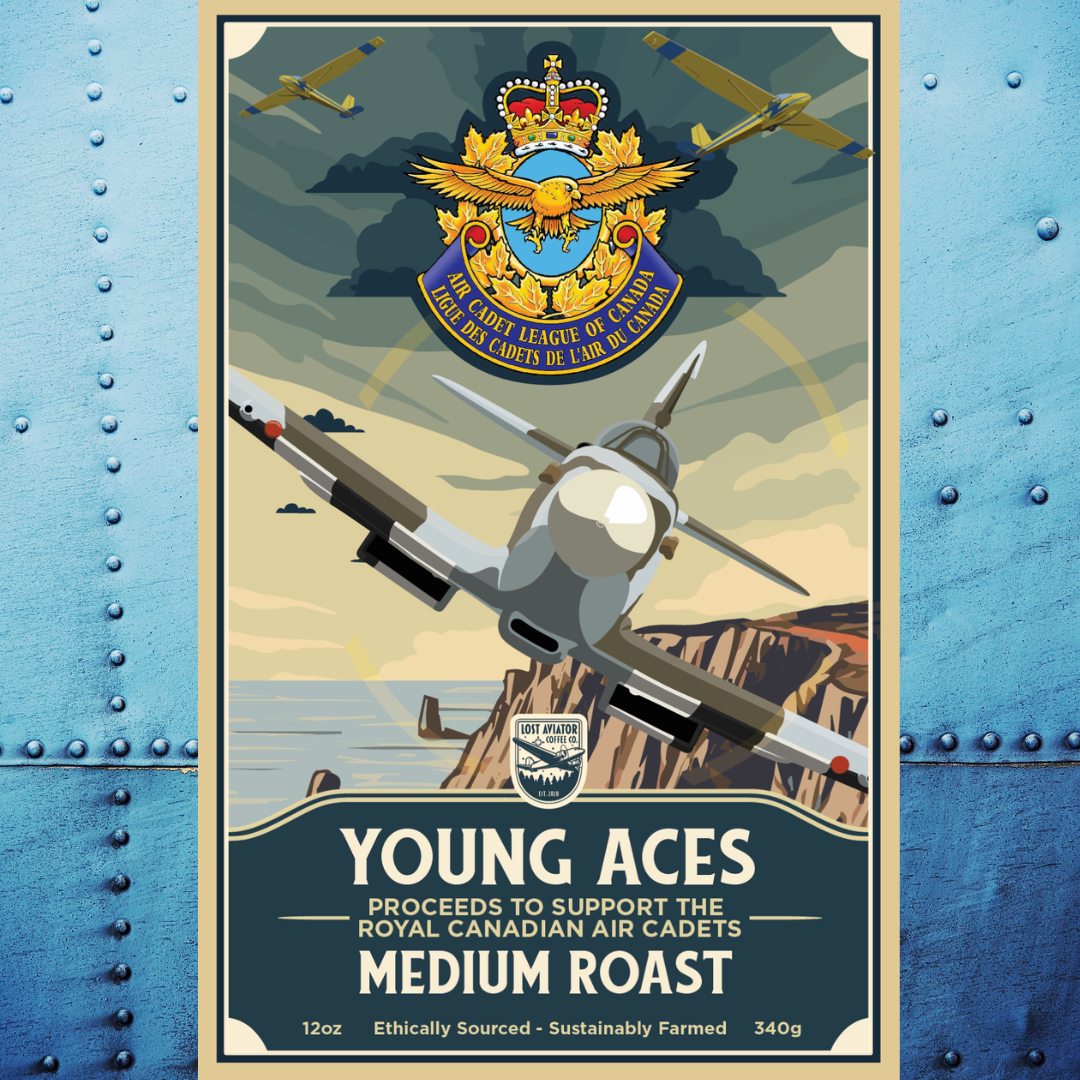
| Young Aces | Medium | Cocoa, chocolate, hazelnut and brown sugar | |
| Red Eye to Rome | Medium (espresso) | Dark chocolate, dark fruits and crema | Brazil (natural, Minas Gerais), Colombia (washed), Ethiopia (natural) |
| North Star | Dark | Smooth and robust, cocoa and a hint of tobacco | Brazil (natural, Minas Gerais), Colombia (washed) |
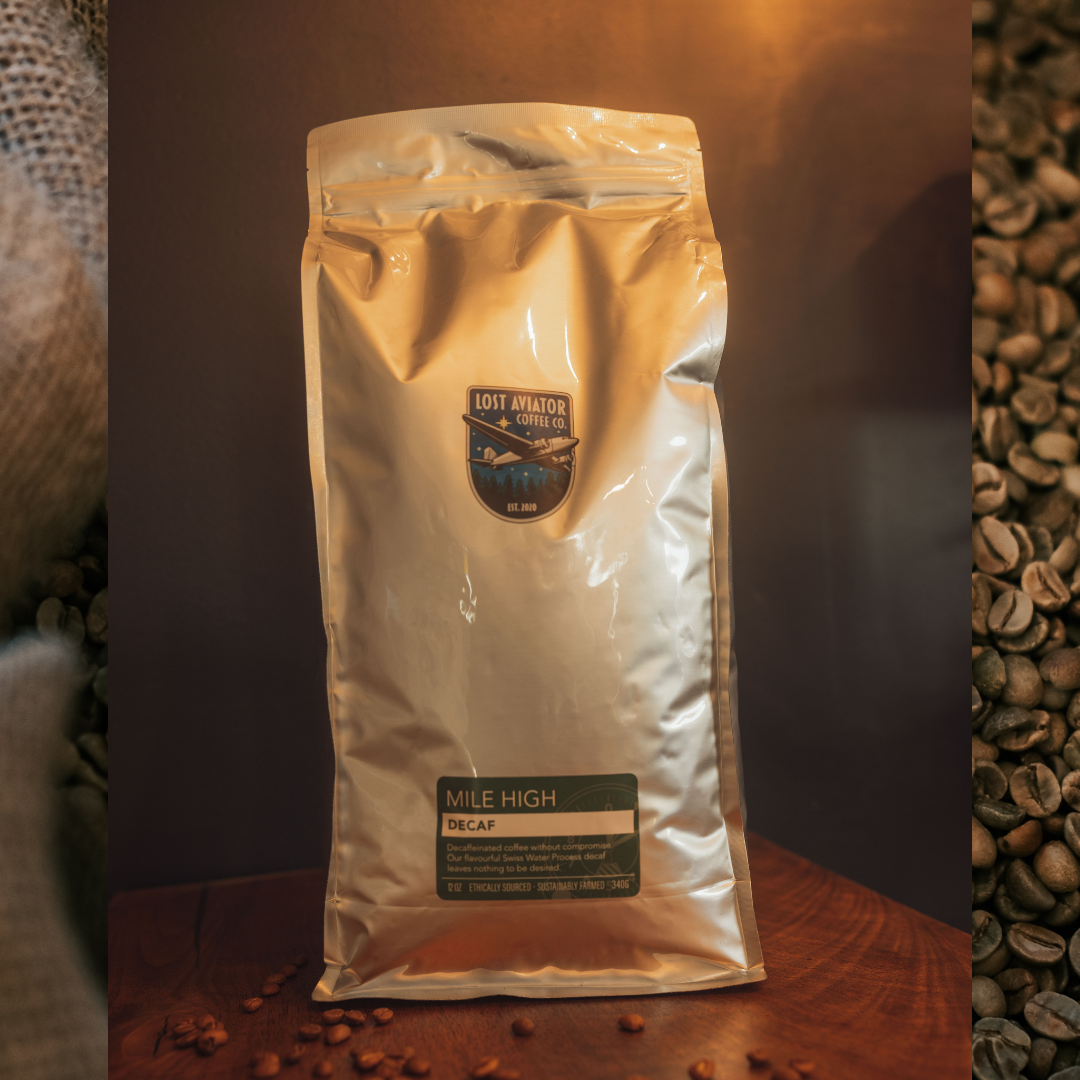
| Mile High Decaf | Medium | Well-balanced and smooth; Swiss Water Process | Colombia (washed) |
Want less caffeine without giving up your favourite roast? Half Moon Half Caf blends one of our roasts with Mile High decaf.
Still not sure? Our Sample Pack includes all five of our signature roasts, so you can taste them side by side. Then keep them tasting their best with our guide to storing coffee beans.
The official AeroPress recipe, explained step by step, with what to change for pre-ground coffee and answers to the most common questions.
Read moreAn easy Hario V60 pour-over recipe with exact weights, the right water temperature and what to change when a cup tastes off.
Read moreAt Lost Aviator Coffee Company, we believe that fresh roasted coffee is not just a luxury—it’s a necessity
Read more